Every good detective knows the trick: don’t chase the obvious suspect, follow the evidence back to where it actually started. Most of us treat our health the same wrong way — we spot one symptom, one number on a lab report, and we go after it in isolation. High cholesterol? Blame the eggs. Low energy? Blame the coffee.
But if you actually follow the trail, it keeps leading back to the same place: your liver.
The liver is the meeting point for almost everything your body is running — detox, repair, hormone balance, energy production. And if you’re carrying extra weight around your middle, here’s the piece most people never hear: some of that fat isn’t just sitting on your belly. It’s sitting in your liver. A liver working overtime to manage fat has a much harder time doing its actual job.
The Evidence: What the Liver Is Really Doing
Two clues point straight to the liver:
- It converts fat into cholesterol to build hormones. Cholesterol rises when hormone demand rises — a sluggish thyroid, low progesterone, chronic stress. So a high number on your lipid panel isn’t always “too much bad food.” Sometimes it’s your liver responding to what the rest of your body is asking of it. We have to find out why your body wants more.
- It filters your blood. This detox operation runs on sulfur-rich amino acids — supplied by broccoli, eggs, garlic, ginger, and onions.
When the liver gets weighed down with fat, the trail doesn’t stop there. It can lead to non-alcoholic fatty liver disease and the risk of scar tissue damage, to lower bone density, and to blood sugar problems. None of these show up overnight — which is exactly why they’re worth catching early.
Confession: My Diet Isn’t Perfect Either
Even the detective has a weakness. Mine is lunch. If I’ve had any stress in the day, I go straight for comfort food — a hamburger is usually first on the scene. It’s fast, it’s easy. The salmon and beet salad at Trail’s Edge is the smarter suspect, and still, some days it doesn’t get picked. Not because I don’t know better. Because of habit, and because of time.
So instead of pretending willpower solves it, I went looking for something that could actually compete with fast food on the two things that decide what I eat: cost and speed. That’s what led me to the Mediterranean diet — and to the bento box.
My go-to lunch (a Bklyn Bento box):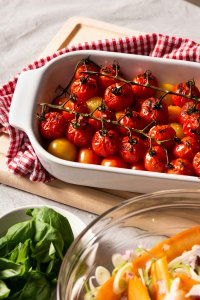
- Pitted Castelvetrano olives (Mezzetta)
- Manchego sheep’s cheese — 100% sheep’s cheese sidesteps most dairy allergen issues
- Cherry tomatoes, or another fruit or vegetable you like
- Mineral water
The fat in the olives and cheese keeps you satisfied, and the fiber from the vegetables closes the case. No chemicals, no plastics, no preservatives — and your liver gets a genuine break to start its own repair work.
Dinner: The Star Witness Is the Artichoke 
If lunch is about giving the liver a break, dinner is where you actively help it repair. And if this case had a star witness, it would be the artichoke.
Artichokes are rich in two flavonoids — quercetin and silymarin — well documented for liver repair. Silymarin calms the inflammatory response that leads to fibrosis, or scarring, helping preserve the liver’s normal structure and blood flow. It also mops up the reactive molecules that damage liver cells, which is part of why liver enzymes on bloodwork tend to improve. And it supports glutathione — your body’s lead detox agent.
You don’t need to overcomplicate the investigation. Artichokes come in jars or cans, or you can boil or roast them fresh. (Let me know if you’d like a recipe video — happy to put one together.)
A simple dinner template:
- A lean protein: steak (well-trimmed), chicken thighs (skin removed, fat cooked off), U.S. Gulf shrimp, or salmon
- Artichokes, or another vegetable you enjoy
- Balsamic vinegar and extra virgin olive oil — no butter
- Salt and pepper to taste
- Onions and garlic, for their sulfur content, feeding glutathione production
Start Small
Losing even 10 pounds means real fat is coming out of your liver. That’s not a minor lead — that’s the case breaking open.
Here’s the strategy to try:
Pick one meal. Just one. Get it to a place that’s low-fat and free of corn syrup — corn syrup is a known in overeating, since it blunts your “I’m full” signal.
Once you have the one meal down, move to the next. Be patient with yourself.
Add 7 minutes of movement. Research backs a short, fast-paced routine for real cardiovascular benefit — you don’t need an hour at the gym to crack this one. And if you genuinely hate exercise, go wash the car. It works just as well as a workout you’ll skip.
Small and doable works. Once one habit sticks, the next is easier than you’d expect.
Supplements
Food and movement do most of the legwork — but for patients working through this with me, a few targeted supplements make good backup:
- Perque’s pure potent C powder supports the adrenal glands, helping stabilize blood sugar and break the cycle of overeating and sugar cravings.
- Repair Guard delivers concentrated quercetin.
- Cholenest is our artichoke-based homeopathic formula, for extra liver support beyond diet alone.
If you want to talk through whether any of these belong on your case file, that’s exactly the conversation to have at your next visit.
Sources: Hepatoprotective Potential of Herbal Bioactive Components: Phytochemistry, Mechanism, and Therapeutic Insights. Current Pharmaceutical Research, Vol 2, Issue 1, Jan-Mar 2026.
Fast Fitness: Comparing 7-Minute High-Intensity Interval Training vs. Walking for Cardio-Metabolic Health in Overweight Women, Nov 2025.